
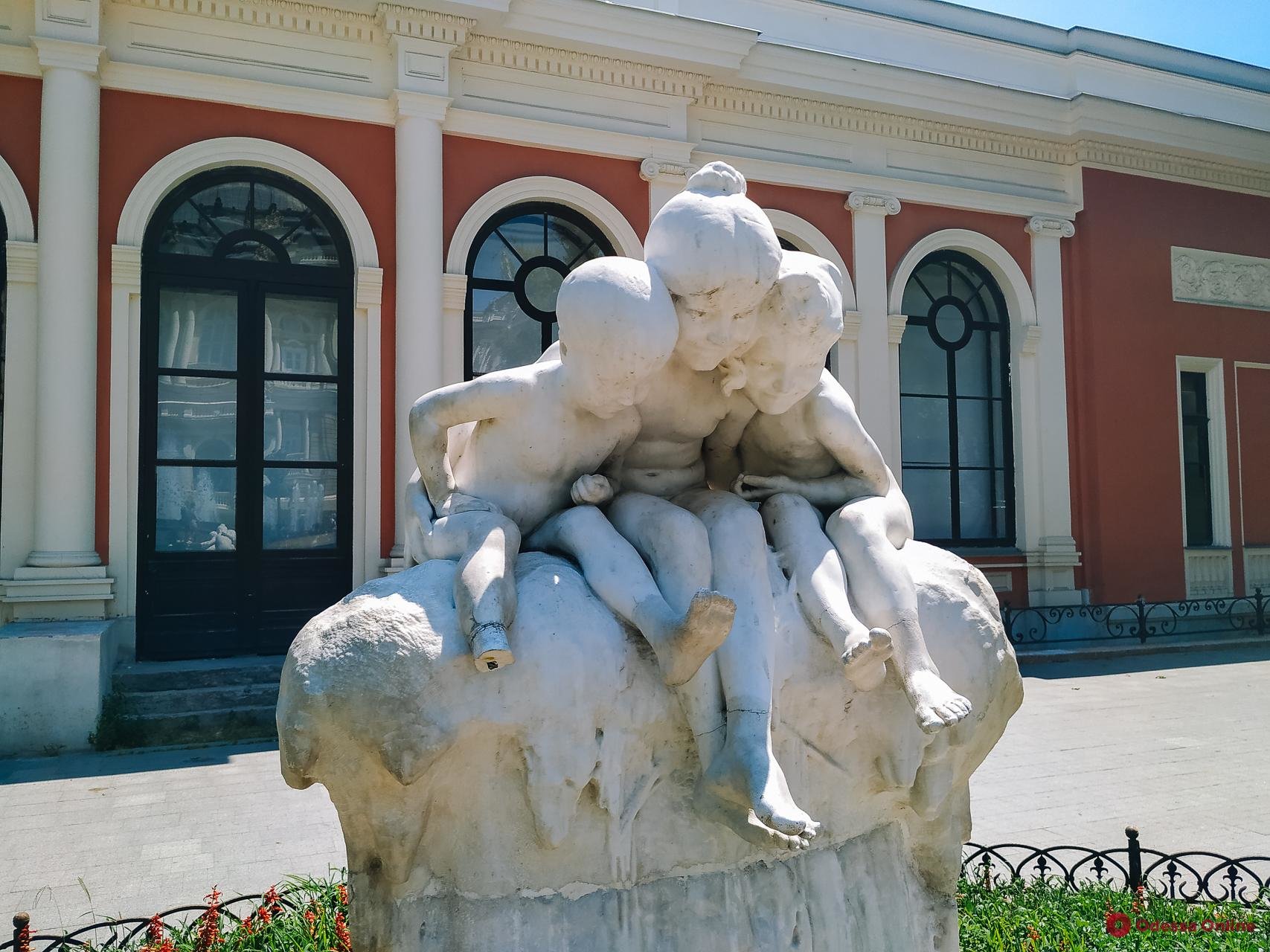
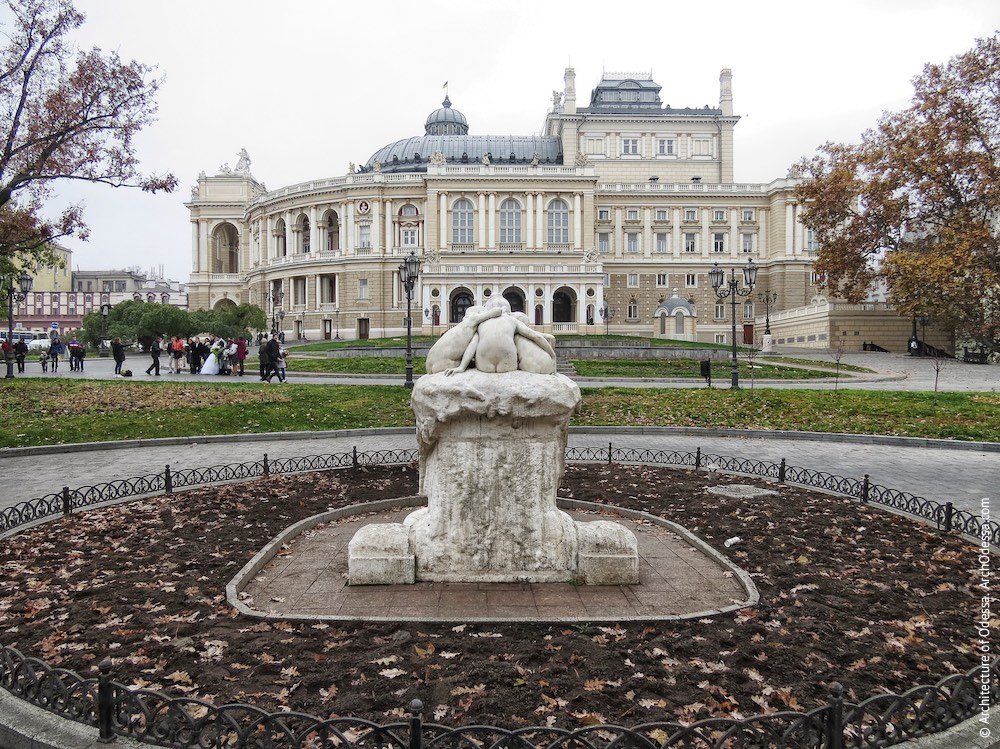
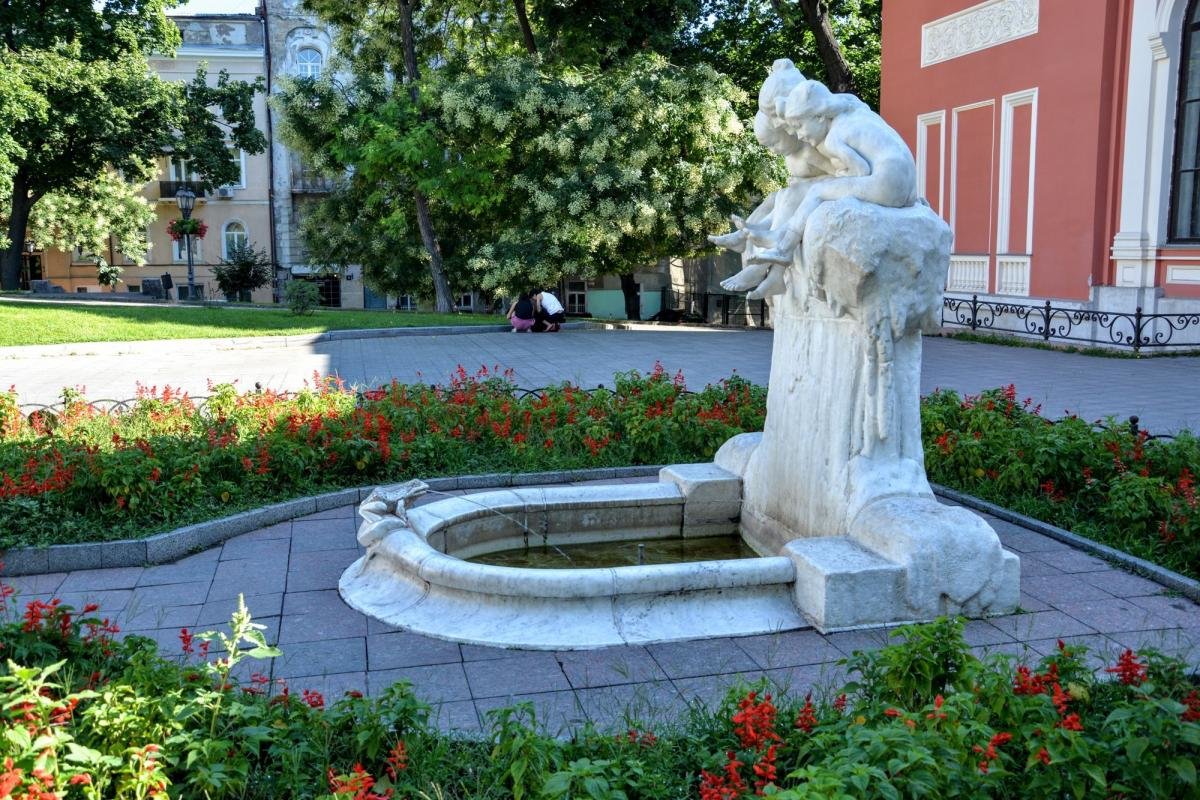
One of the most famous and aesthetically significant monuments of monumental art in the center of Odessa, the Molodist fountain is one of the commissioned copies of the sculptural composition of the French Art Nouveau sculptor Max Blond, called Children and the Frog or Narcissus by the citizens of Odessa.
The sought-after French sculptor Max Blonda exhibited the Molodist marble fountain composition at the 1904 Paris Art Salon. The work was a success; several buyers from different European countries tried to acquire it. Perhaps to meet demand, the sculptor agreed with buyers to make replicas of the sculptural group.
Approximately in those years (1905-1907), one of the sculptural groups was acquired by someone from wealthy Odessa citizens. According to the assumption of Elena Krasnova and Anatoly Drozdovsky, the sculpture was originally installed on the territory of the dacha of Akim Bisk, a famous jeweler in the South of Russia and the father of the poet and translator Alexander Bisk. Bisky owned a dacha at 26 French Boulevard, where the buildings of the Odessa University named after Mechnikov.
After the establishment of Soviet power, real estate was nationalized. This fate befell the Bisky dacha.
The architect V. Trofimenko in the bibliographic reference book "Architects of Ukraine in the late 18th - mid-20th centuries" indicated that the sculpture-fountain "Children and Frogs" was installed on Theater Square in Odessa in 1925. At the beginning, the fountain was installed in the center of the Theater Garden (in pre-war and post-war photographs this fountain is clearly visible against the background of the theater, turned towards it with its back side). In the 1970s, the composition was moved close to the building of the English Club, which in Soviet times housed the Odessa Naval Museum. At this place, it is located to this day.


 Share on Facebook
 Share on X