
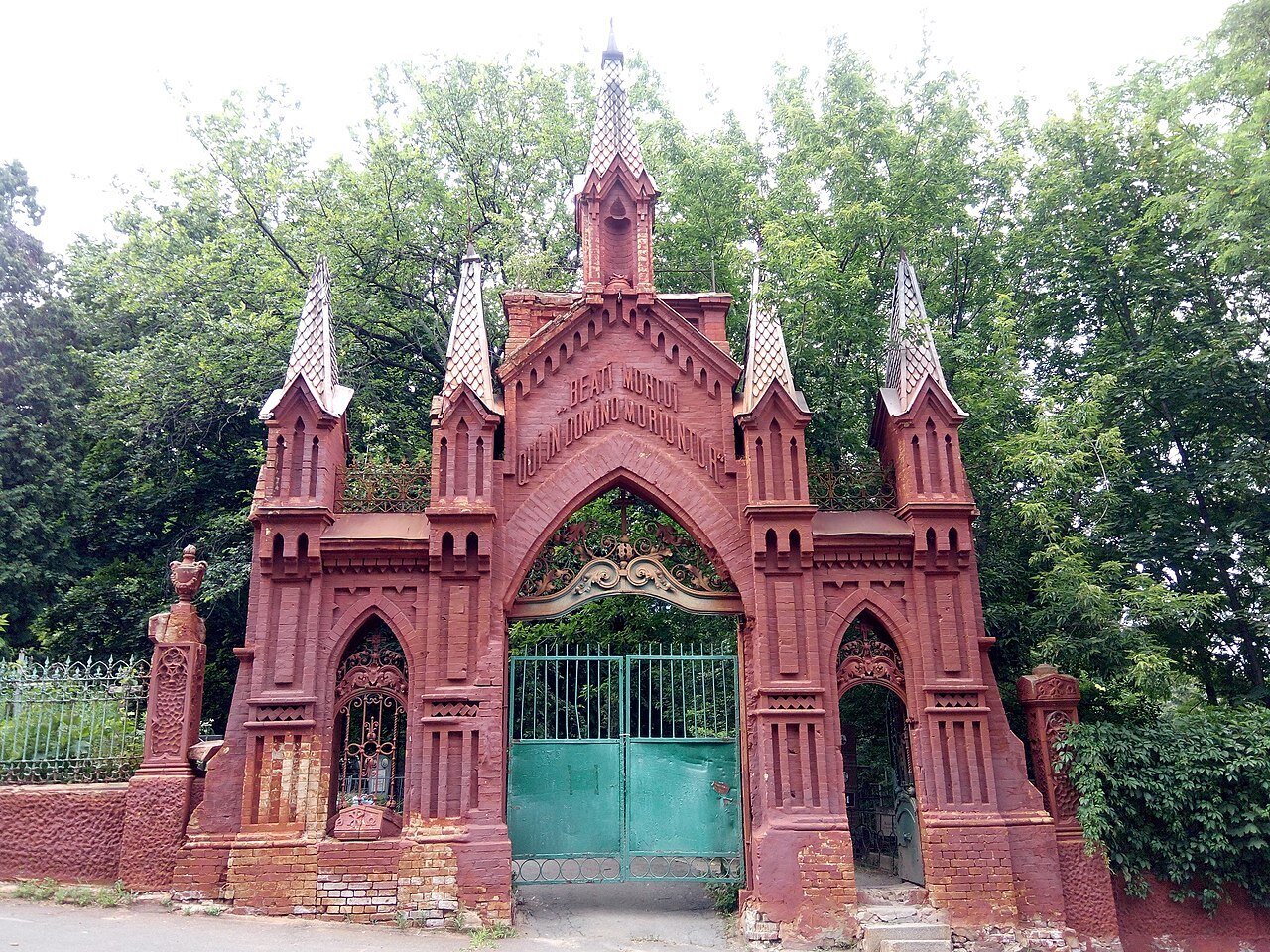
Baikove Cemetery is a historic necropolis in the Holosiivskyi district of Kyiv, a cultural and historical landmark founded in 1834.
It is one of the city’s oldest cemeteries, covering more than 72 hectares. Baikove became the first Kyiv necropolis to bury people of different confessions: Orthodox, Catholic, Lutheran, Jewish, and others.
The cemetery was named after Major General Serhiy Baikov, on whose land it was established. Initially, it was called Novostroyenske and was used by the Lutheran community, which transferred burials here from an old flood-prone cemetery. Its official opening took place after fundraising among Kyiv residents, and the area was landscaped with trees, ravines, and guardhouses.
In 1876, the cemetery expanded, forming the Old and New Baikove Cemetery. Churches were built here — the Dmytrivska Church (1841) and the Ascension of the Lord Church (1884–1889) — along with about twenty historic family vaults constructed according to the traditions of different confessions. Architects involved in the cemetery’s design included Vladyslav Horodetsky, Volodymyr Nikolaiev, and Mykhailo Ikonnikov.
Baikove Cemetery is the final resting place of prominent Ukrainian figures, including Lesya Ukrainka, as well as famous scientists, artists, politicians, and military figures. In 1975, a crematorium was opened on the cemetery grounds, which is still operational today. Baikove Cemetery preserves unique vault architecture and Kyiv’s valuable cultural heritage, combining history, art, and memorial tradition.


 Share on Facebook
 Share on X